


Travelling with an elderly parent or a family member who uses a wheelchair can be a wonderful experience. But it usually needs a little more planning than a regular trip.
The difficult part is often not the destination. It is knowing what to arrange before you leave.
How far can the traveller walk? Is the hotel easy to move around? Can the vehicle get close to the entrance? Are there stairs? Will wheelchair assistance be available? How much waiting will there be at a temple or other place of interest?
These questions become even more important when the trip includes a pilgrimage or several cities.
This guide shares some simple things families should consider when planning wheelchair-friendly travel in India with an elderly parent, a wheelchair user or someone who has difficulty walking.
Also Read: Best Navagraha Temple Tour Package in Tamil Nadu: Complete Guide to the 9 Sacred Temples
1. Understand the Traveller Before Booking
Not every elderly or wheelchair traveller has the same needs.
Before booking, consider:
- Can the traveller walk independently?
- How far can they comfortably walk?
- Do they need a wheelchair all the time or only for longer distances?
- How much assistance do they normally need?
- Will family members be travelling with them?
- Are stairs or long walking distances difficult?
Someone who can walk for a few minutes and then needs a wheelchair will need different arrangements from someone who cannot walk at all.
Understanding these requirements before booking helps the family and travel planner arrange a trip around the person.
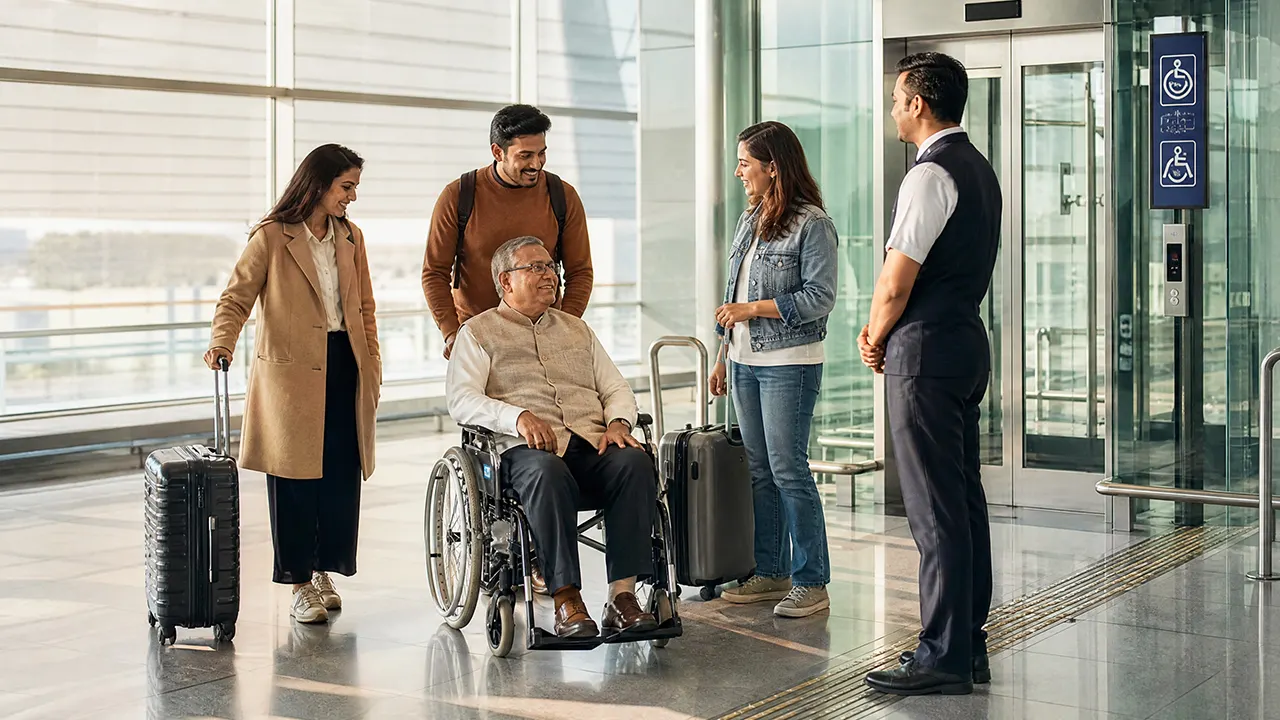
2. Choose the Hotel Carefully
For an elderly traveller, a hotel is not only about the room or its rating. Convenience also matters.
A ground-floor room can make things easier. If that is not possible, check whether the hotel has a reliable lift and how far the room is from it.
It is also useful to tell the hotel about the traveller’s requirements before arrival.
For our clients, we generally look at 4-star premium hotels, while 5-star hotels can be arranged on request. The final choice depends on the traveller, itinerary and family requirements.
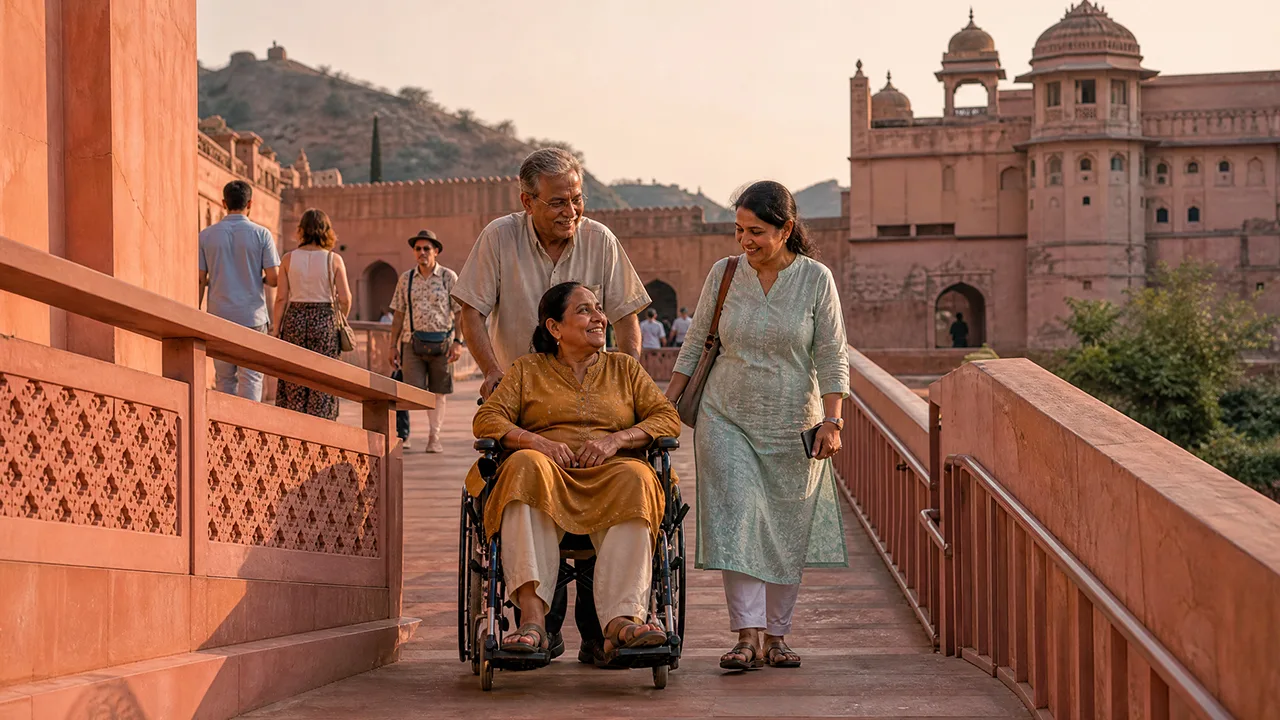
3. Plan Transportation Around the Traveller
The vehicle becomes especially important during a long-distance or multi-city trip.
There should be enough space for the traveller, family members, luggage and the wheelchair or other mobility equipment being carried.
For longer trips, a larger, relatively new and well-maintained vehicle can make the journey more comfortable.
A private vehicle with a dedicated driver can also give the family greater flexibility. They can take breaks when needed and adjust the pace according to the traveller’s comfort.
4. Plan Wheelchair Assistance From the Start
Wheelchair assistance should not be considered only after reaching the hotel.
If assistance is required, discuss it before the trip, including arrival, pickup, transfers, sightseeing and pilgrimage visits.
Some wheelchair users need a wheelchair only for longer distances, while others need one throughout the trip.
It is therefore important to look at the whole itinerary rather than assume that one arrangement will work everywhere.
Walking distances, steps, queues, vehicle access and the facilities available at each destination can all be different.
5. Extra Planning for Pilgrimage Travel
Pilgrimage trips can require additional planning for elderly or wheelchair travellers.
Before visiting a temple or other spiritual place, ask:
- How much walking will be required?
- Where can the vehicle drop the family?
- Are there stairs or uneven surfaces?
- Is wheelchair assistance available?
- How long might the family need to wait?
- Is VIP Darshan or another suitable option available?
Do not assume that a private vehicle can reach the temple entrance. Some religious places have restrictions on vehicle access.
Where available and appropriate, VIP Darshan may help reduce unnecessary waiting. Rules and arrangements vary from one temple to another, so they should always be checked for the particular destination.
It is also important to allow enough time for rest. A comfortable pilgrimage does not need to fit as many places as possible into one day.
6. Real Pikme Case Study: Varanasi, Prayagraj and Ayodhya
One Pikme-arranged trip covered Varanasi, Prayagraj and Ayodhya, with an elderly mother travelling with her family.
The family needed additional mobility support, so the arrangements were planned around her needs.
Pikme-arranged pilgrimage trip to Varanasi, Prayagraj and Ayodhya with wheelchair assistance for an elderly parent.
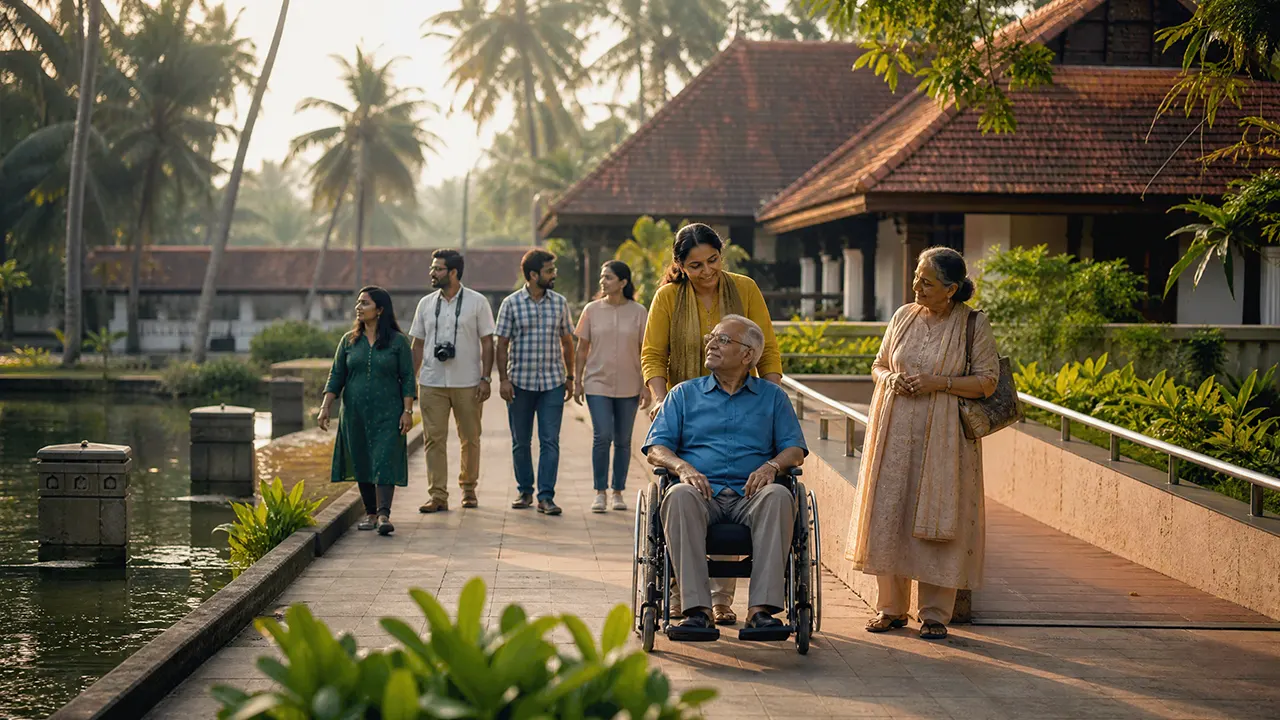
Pikme coordinated the main arrangements, including:
- A private vehicle with a driver throughout the trip
- Hotel selection and booking
- Wheelchair assistance for the mother
- VIP Darshan reservation
- Special seating arrangements for the Ganga Aarti
- Ongoing communication with the family
The vehicle had sufficient space for the wheelchair and luggage. Hotel arrangements were also considered from a mobility point of view, with preference for a ground-floor room where possible or a hotel with lift access.
Walking distance, vehicle access, wheelchair assistance and timing were considered when planning the spiritual visits.
With these arrangements in place, the mother was comfortable throughout the trip.
The main lesson is simple: comfort usually comes from several small arrangements working together.
7. Quick Wheelchair-Friendly Travel Checklist
Before departure, families should consider:
☐ Confirm the traveller’s mobility needs
☐ Check how far they can comfortably walk
☐ Confirm wheelchair requirements
☐ Check for a ground-floor room or lift access
☐ Tell the hotel about the requirements in advance
☐ Choose a suitable vehicle with enough space
☐ Confirm wheelchair assistance
☐ Check temple walking distances and vehicle drop-off points
☐ Check VIP Darshan or other suitable options where available
☐ Arrange suitable seating where available
☐ Allow enough rest between visits
☐ Keep important booking and contact details accessible
8. How Pikme Supports Travellers With Mobility Needs
At Pikme, we look at mobility requirements as part of the complete trip rather than treating wheelchair assistance as a separate service.
We consider the traveller’s mobility, hotel requirements, vehicle, wheelchair assistance, pilgrimage visits, timing and rest periods together.
For longer or multi-city trips, we consider the space and comfort required for the traveller, wheelchair, luggage and family.
For pilgrimage travel, we look at practical details such as walking distances, vehicle access, drop-off points, waiting time and available assistance.
During the trip, Pikme remains in communication with the family so arrangements can be coordinated as needed.
The idea is simple: the trip should be planned around the person travelling, not the other way around.
Planning a Trip With an Elderly Parent or Wheelchair Traveller?
Share the traveller’s mobility requirements with Pikme before booking, so the hotel, vehicle, wheelchair assistance and itinerary can be planned around their needs.Contact Pikme to discuss your requirements and plan a comfortable trip for your family.
